
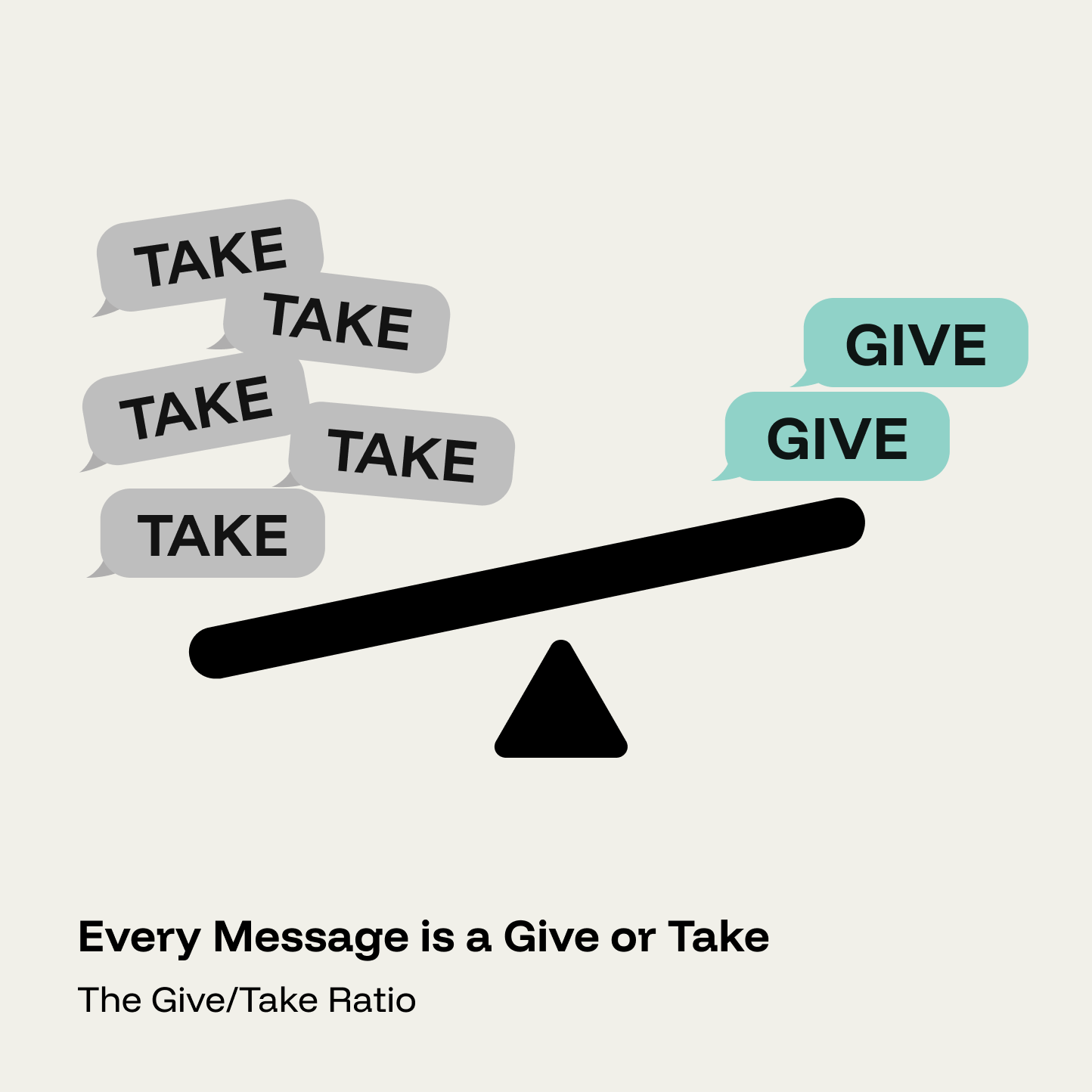
Every Message is a Give or Take
Most patient onboarding sequences are a series of asks: confirm, create, complete, upload, schedule, sign. Eight messages, and the patient hasn't received a single thing. The teams that move completion rates usually aren't the ones reducing friction on their asks. They're the ones who started adding value between them.
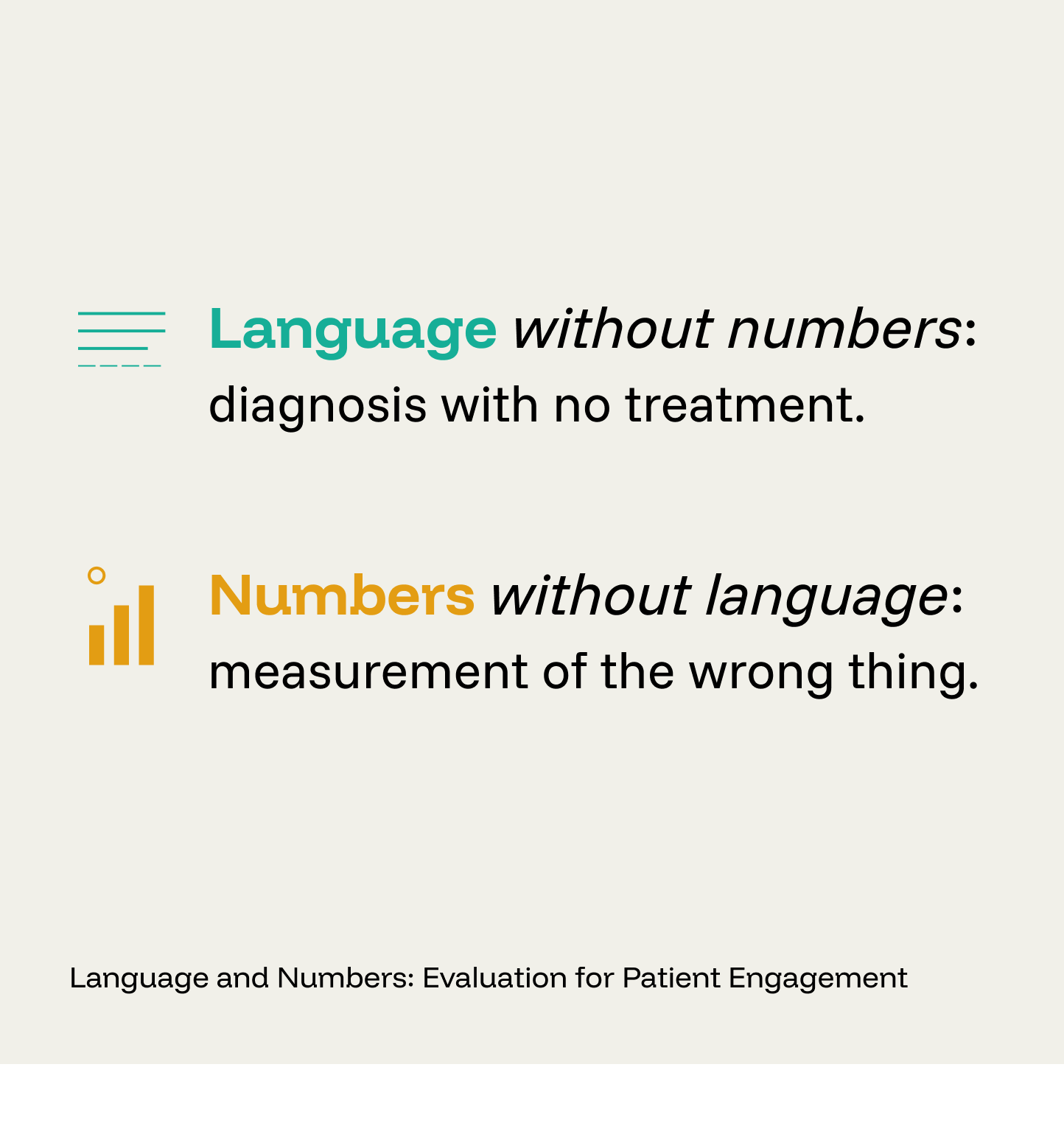
Language and Numbers: Evaluation for Patient Engagement
Most teams evaluate AI-generated patient messages by checking whether they were delivered, opened, and readable. But a message can score green on every metric and still fail the patient it was written for. Knowing whether it actually worked requires holding two things at once: the qualitative judgment to catch what the numbers miss, and the measurement to know how often it's happening.
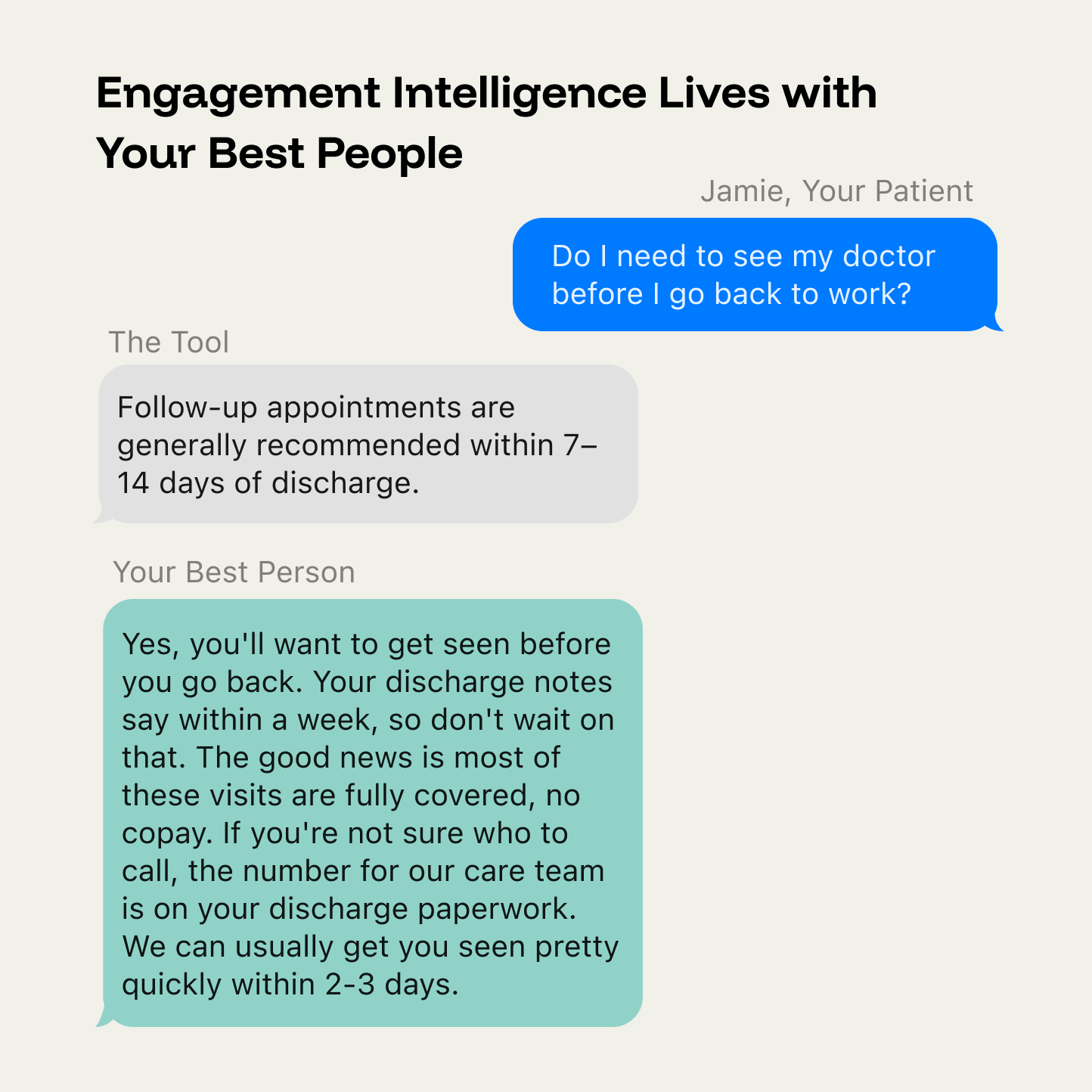
Engagement Intelligence Lives with Your Best People
Most conversational AI tools sound the same because they run on generic documents, not on what your best people actually know. The gap isn't adding someone's name or plan details. It's hearing what they actually need in the question they're asking. We call that engagement intelligence, and it doesn't get into the tool through better engineering. It gets in through the hard work of making your team's invisible knowledge visible.
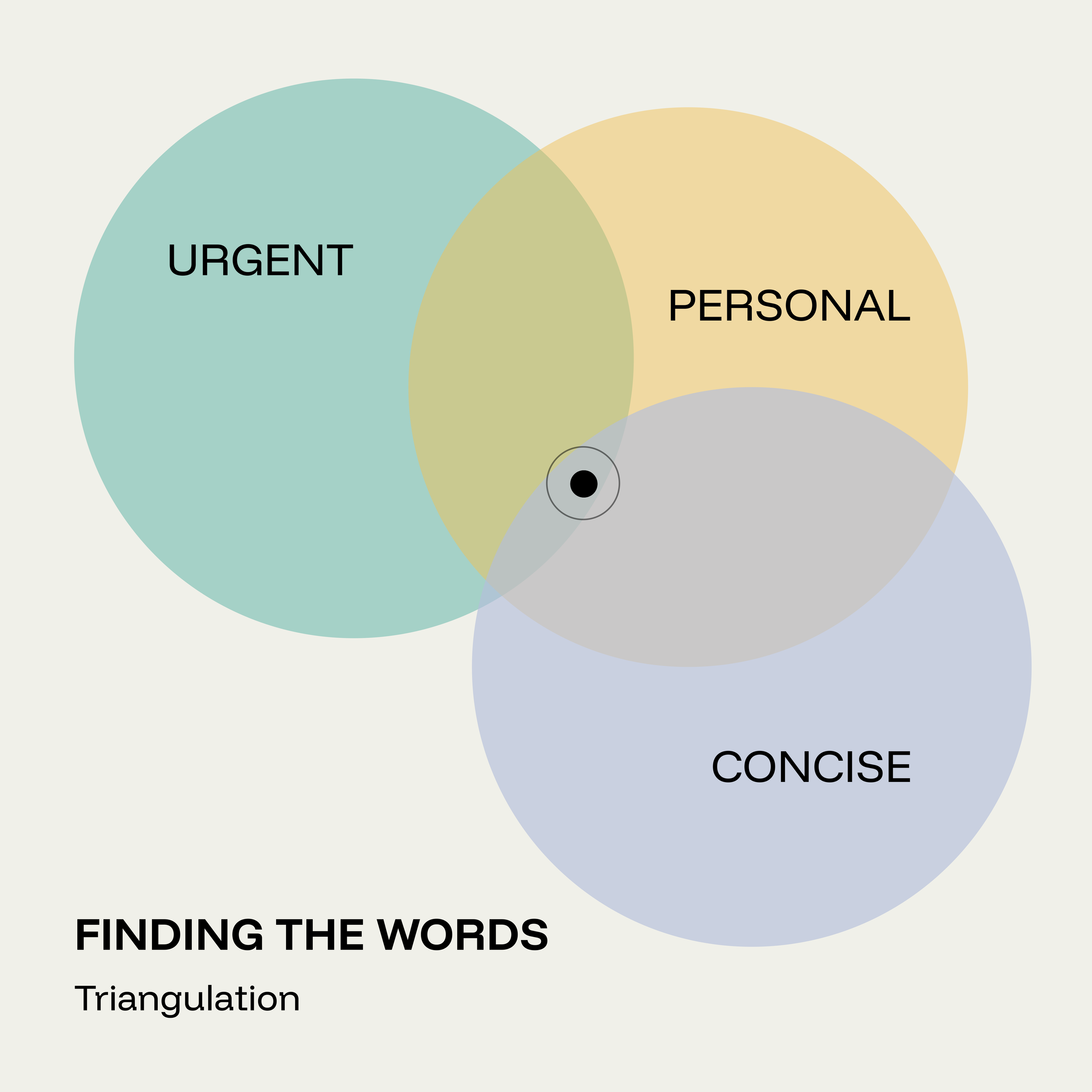
Finding the Words
The biggest barrier to effective AI prompting isn't unclear instructions, it's not yet having the words for what you need. The real skill is triangulation: choosing one quality, seeing what it produces, and trading deliberately until the message lands. This is why so much patient communication sounds the same. Teams stack adjectives instead of making intentional tradeoffs.
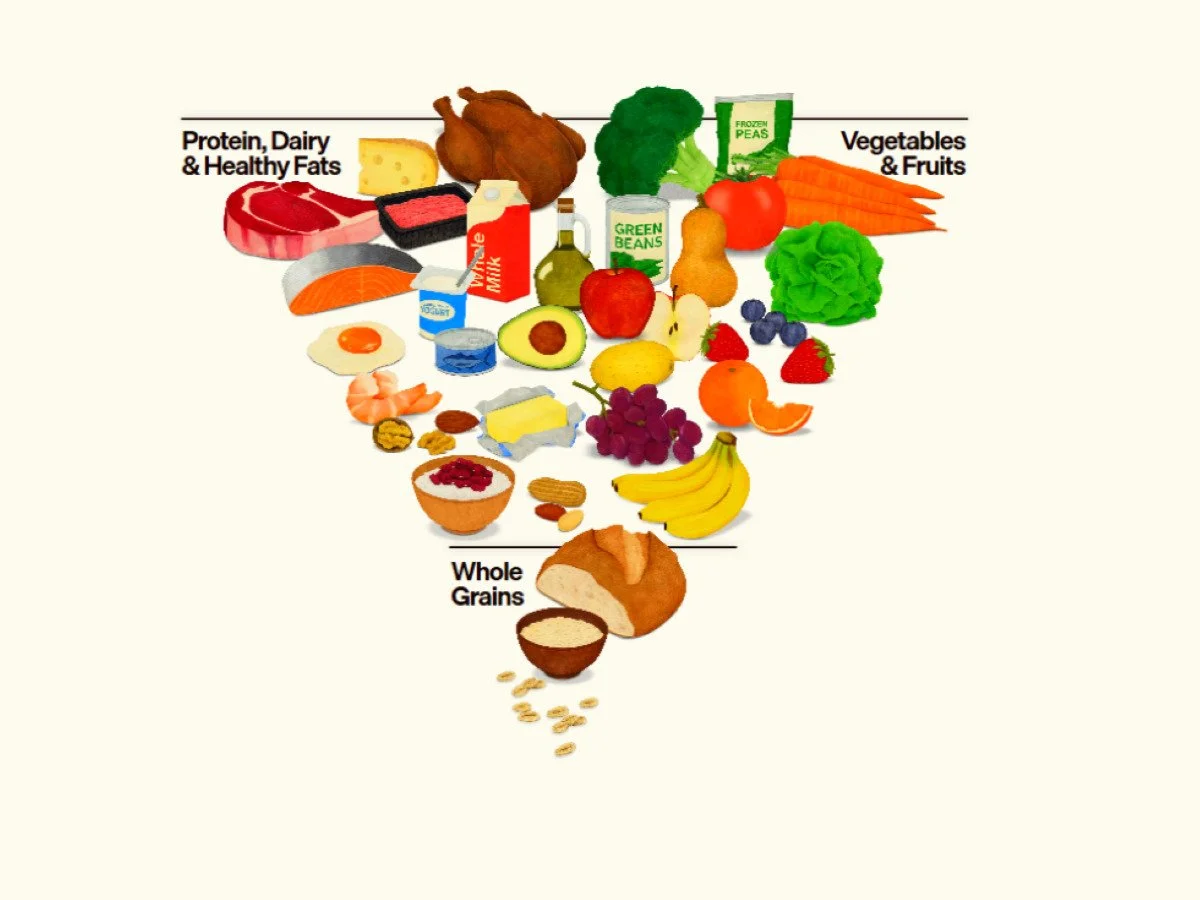
From Food Pyramid to Plate and Back Again: Three Theories of Behavior Change
The evolution from the 1992 food pyramid to MyPlate to the new 2026 pyramid reveals three distinct theories of behavior change: education, environmental restructuring, and motivation. Each design represents a different diagnosis of why people don't eat well, and understanding that diagnosis matters more than the image itself. With food habits, are we solving for what people know, what they can easily do, or what they want?

Human-Centered AI: Meaningful Innovation in Community Healthcare
AI isn't just for large organizations. Community healthcare clinics can harness its power through a human-centered approach that requires minimal investment. Nimble organizations might actually lead healthcare innovation by focusing on "humaning"—giving providers more time for what truly matters: the irreplaceable human connection that sits at the heart of effective community healthcare.

AI Prototyping for Engagement in Healthcare: Accelerating the Path from Problem to Solution
AI-powered prototyping enables healthcare teams to rapidly transform behavioral challenges into functional solutions—no design expertise required. This approach bridges the expertise gap between clinicians, operators, and designers while enabling parallel exploration of multiple approaches, dramatically compressing the timeline from problem to solution and making sophisticated engagement strategies accessible to organizations of all sizes.